
Getting beyond your story
Change isn’t a matter of willpower or finding the right technique.
How Change Actually Happens
All the factors described on the previous page; genetics, early experiences, relationships, culture, random events, converge in your nervous system and get translated into a story of beliefs that creates your sense of identity. An identity that then feels like it needs constant defending and upgrading.
You might consciously want to experience life differently, to make changes that would improve your wellbeing, yet find it frustratingly impossible to do so. We live in a world saturated with promises of transformation: “Change your life in 30 days!” “This one method will fix everything!” When these approaches don’t work, it’s easy to feel like you’re failing, not trying hard enough or that there’s something wrong with you. The reality is more straightforward: change isn’t a matter of willpower or finding the right technique. If your nervous system’s underlying organisation hasn’t shifted i.e if the conditions that created your current patterns are still in place, lasting change simply isn’t available yet, regardless of how much you want it or how hard you try.
Some people do seem to consciously “turn their life around” but if you look closely, it’s unlikely to be just determination. Usually multiple conditions could shift, such as circumstances changed, they found safe relationships, their body was ready, enough time had passed or some combination of factors aligned to allow reorganisation.
Whilst you can’t force your nervous system to reorganise through willpower, you can create conditions that make change more possible. That’s what my work focuses on – not “fixing your mind” or replacing your story with a better one, but allowing space for the system to recognise its own patterns and potentially reorganise when it’s ready.
There’s no “right” or “wrong” experience of life. Your story creates a completely unique interpretation of reality, as valid as anyone else’s, but if your current patterns are creating significant stress or suffering and you’re seeking change, there are approaches that can help create the conditions for that shift.
The mind/body connection
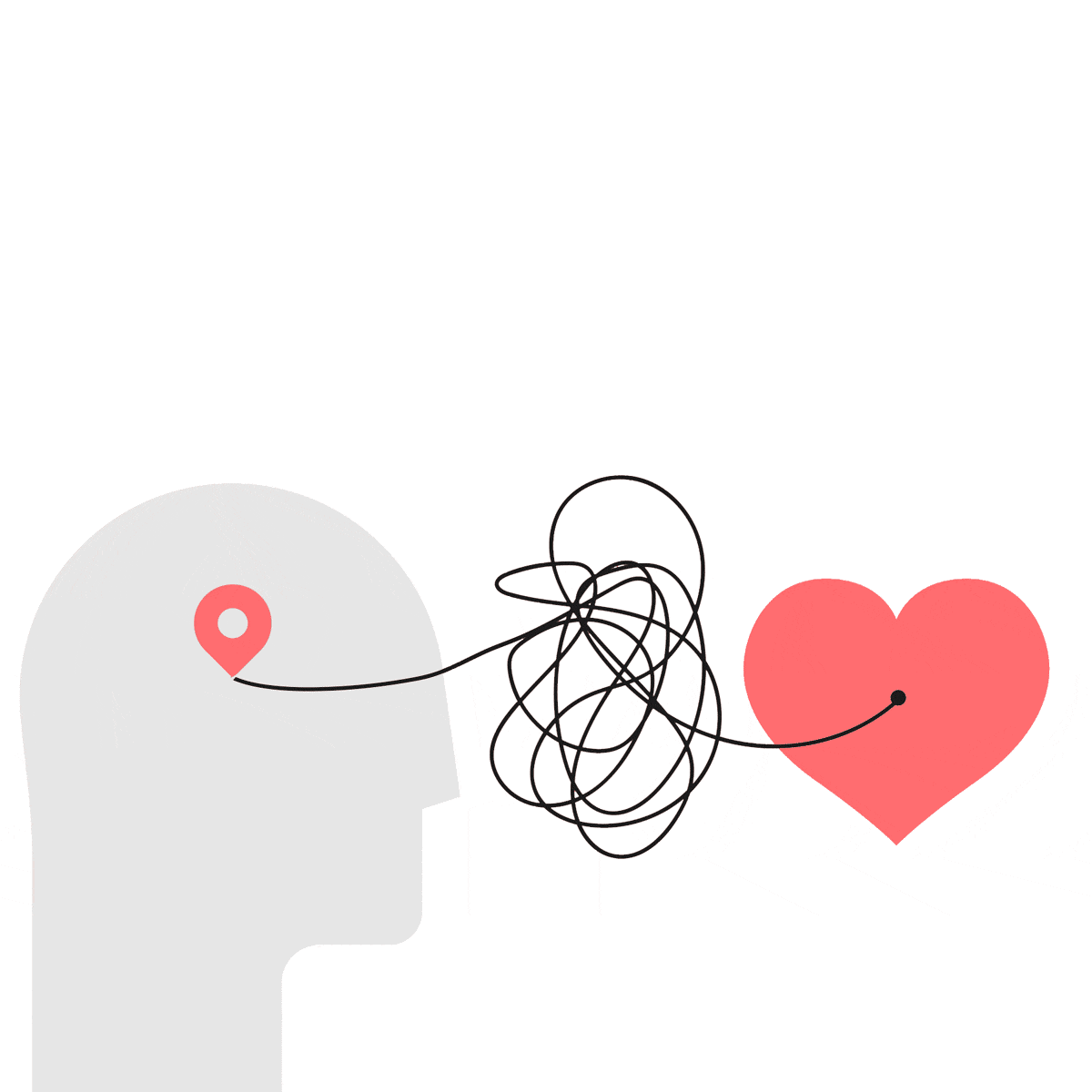
“Symptoms are not your fault, your body is just responding to conditions”
Our biology and our nervous system states are deeply interconnected. Extensive research confirms that chronic stress, early relational trauma and prolonged activation of threat responses play significant roles in many common health conditions including autoimmune diseases, cardiovascular disease, chronic pain conditions, digestive disorders and more.
This isn’t about “thoughts creating reality” or beliefs directly causing illness. It’s about how chronic nervous system activation, driven by unresolved patterns, ongoing stress, suppressed emotions and the body’s attempts to manage threat, affects biological systems over time. When the nervous system is chronically organised around survival responses (fight, flight, freeze), it impacts inflammation levels, immune function, hormone regulation, and overall physiology.
The Limits of Conventional Medicine
The mainstream medical model often treats symptoms as isolated mechanical problems to be fixed with medication or surgery, without exploring the broader context: What’s happening in your life? What patterns might be contributing to this? How is your nervous system organised? What role might chronic stress or unprocessed emotions be playing?
This approach isn’t wrong and acute interventions save lives and manage serious conditions, however it often misses the bigger picture that symptoms can arise not just from random biological malfunction, but from the body operating under chronic pressure and holding patterns that were once adaptive, but have now become physiologically costly.
For example:
- Chronic tension or pain might reflect the body holding defensive patterns
- Digestive issues often correlate with nervous system dysregulation
- Autoimmune conditions can emerge when the system has been in prolonged stress states
- Fatigue might signal the body’s resources are depleted from chronic vigilance
This doesn’t mean symptoms are “your fault” or that you caused your illness through wrong thinking. It simply means your body is responding to conditions.
When the grip of your story loosens, when you’re less caught in defending a fixed identity, less chronically vigilant, less automatically suppressing emotions or needs, the nervous system can often shift toward more regulated states. This doesn’t cure all illness, but it can reduce the chronic activation that contributes to many conditions and can shift how you relate to symptoms – not as random attacks to fight against, but as signals from a system doing its best under conditions it didn’t choose.
It’s time to move